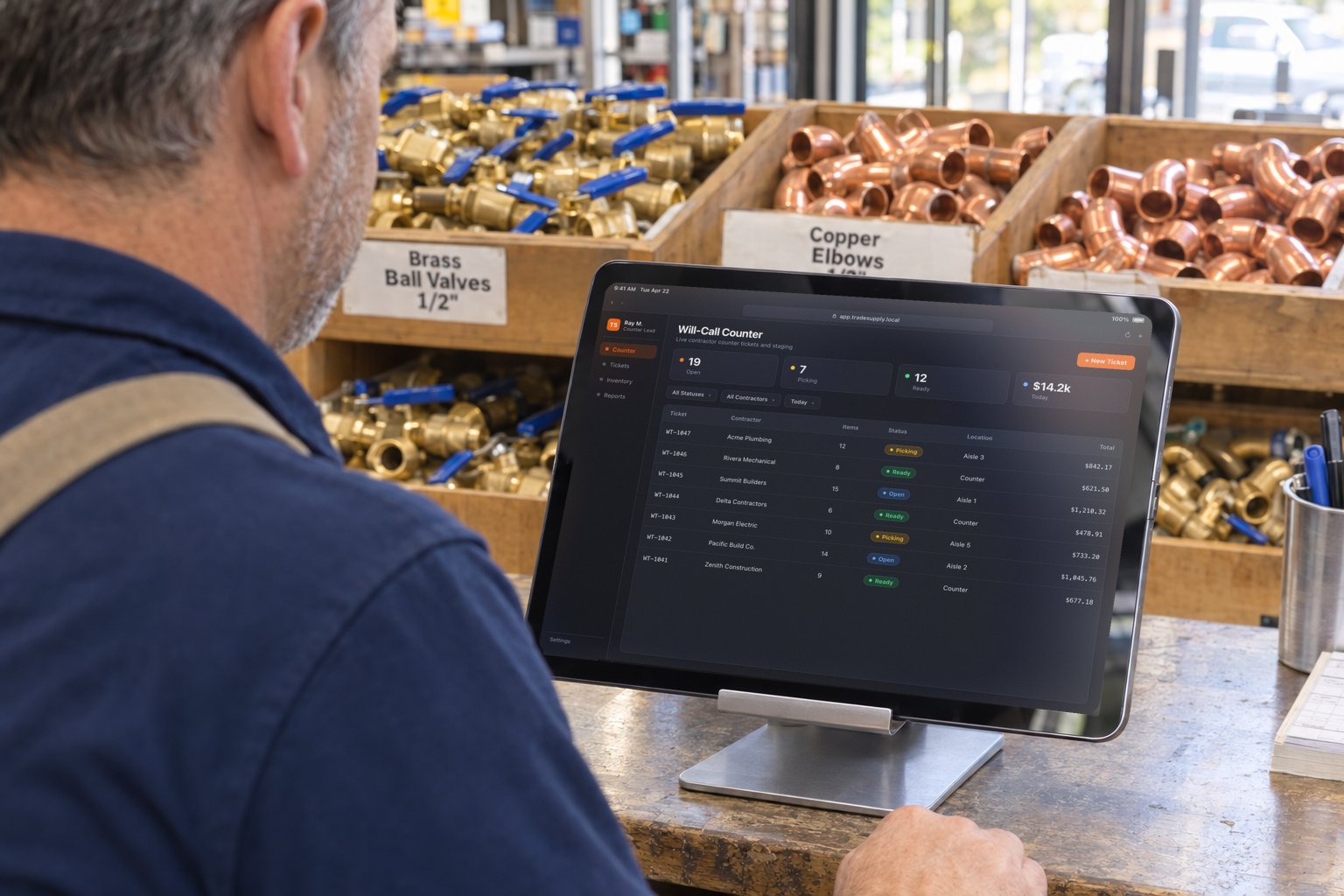
Pick Hercules when your team needs durable daily business software for quoting, scheduling, or internal portals without stitching together external Supabase backends or Git repositories. Hercules runs your managed database, staff and customer logins with company SSO, outbound email, and in-app AI in one place. You describe the operational workflow, publish it, and run the business on it.
Bolt (StackBlitz) is built for product and design teams turning Figma layouts into prototypes, marketing sites, or Expo mobile codebases wired to GitHub and Supabase. Developers and designers get direct access to code, design-system imports, and flexible cloud hosting.
What separates a quick prototype from daily operations software?
A prototype only has to look convincing in a browser demo. Production operations software has to hold up on day thirty, when thirty dispatchers, field techs, and customers log in at the same time, submit quotes, trigger emails, and update live records.
To see where each platform holds up once real work starts, we checked both against seven operational requirements: day-to-day workload fit, database ownership, user login and SSO, payments and integrations, mobile store publishing, code and hosting control, and how billing behaves as usage grows. All product facts below come from current public documentation, pricing pages, and security portals on both sides (including Hercules docs, Hercules pricing, and trust.hercules.app).
Hercules vs. Bolt at a glance
Hercules bundles the operational services a running company needs after launch, including end-user company SSO, outbound email, an integrated AI Gateway, commerce, and app store publishing. Bolt centers on front-end prototypes, Figma design-system imports, claimable Supabase backends, and developer-friendly cloud deployment.
| Criterion | Hercules | Bolt (StackBlitz) | Edge |
|---|---|---|---|
| Primary use | Multi-user ops apps, portals, internal systems | Websites, prototypes, slides, MVPs, design systems | Hercules (daily ops) |
| Hosting and DB | Managed DB, functions, email, AI Gateway included | Bolt Cloud on Supabase, claimable DB and storage | Hercules (zero setup) |
| Auth and SSO | Hercules Auth, roles, company SSO (pricing) | Basic auth (2 emails/hr default), Enterprise SAML SSO | Hercules (end-user SSO) |
| Integrations | AI Gateway, Commerce, App Integrations, Agents | BYO API keys via secrets, Stripe, GitHub, Figma, MCP | Hercules (zero-key AI) |
| Mobile apps | Publishes to Google Play and App Store (iOS beta) | Expo React Native builds, local EAS CLI to publish | Hercules (zero-CLI publish) |
| Code export | Full code and DB download, Hercules Cloud hosting | bolt.host, Netlify, GitHub sync, Enterprise AWS/Azure BYOK | Bolt (BYOK and Git) |
| Pricing | Separate hosting credits and adjustable AI tiers | Free (1M tokens), Pro $25 monthly, Teams $30/seat (pricing) | Hercules (separate hosting) |
Those differences show up fastest in the database layer, where operational apps either stay simple or turn into a second infrastructure project.
Databases, backends, and who runs them after launch
Bolt Cloud runs on Supabase, providing Postgres tables, file storage, edge functions, and automated security checks. If your engineering team already runs Supabase, claiming a Bolt Cloud database into your own Supabase project gives developers full administrative control. For an operations manager without an engineer, claiming that database hands you a second platform to configure and monitor.
Hercules keeps the database inside the same managed environment from your first prompt. Tables expand automatically as you add quoting steps, approval queues, or customer fields, and bulk CSV imports bring existing spreadsheets into live tables.
Paid Hercules plans include full downloads of your source code, database, and uploaded files. Higher tiers add scheduled database backups you can turn on and backend region selection. Choosing a region sets where your app runs, though it does not create a contractual data-residency obligation.
Once the data layer is settled, the next operational test is getting staff and external buyers logged in cleanly.
Staff logins, customer access, and enterprise controls
Hercules Auth handles major social logins (including Google, Microsoft, and Apple), one-time email codes, password login, and SMS sign-in via paid Auth 2.0 right away. You set up staff and buyer roles by describing them in plain English, and companies can wire in their identity provider for end-user SSO (see Hercules pricing for plan eligibility).
Check two security boundaries before committing: Hercules Auth does not currently ship MFA or 2FA, and Hercules has no automated user-directory sync or builder activity logs. Up-to-date security disclosures sit on the Hercules Trust Center.
Per Bolt's authentication docs, built-in app login covers email and password, Google, magic links, and anonymous access. Outbound auth emails cap at two per hour until you wire up a custom SMTP server, and Bolt does not document SAML or OIDC SSO for end users of built apps.
Bolt Enterprise adds workspace SAML SSO through Okta or Azure AD along with builder audit logs. Bolt's trust center publishes its current security certifications along with GDPR and CCPA documentation.
Beyond sign-in, daily software usually needs to charge customers, send notifications, and run background work without manual babysitting.
Built-in AI, email, payments, and integrations
Every Hercules workspace ships with Hercules Email for outbound messages and an integrated AI Gateway. Operations teams never have to create separate OpenAI, Anthropic, or mail-relay keys just to notify a customer or summarize an incoming quote.
Every plan also includes hundreds of ready-made App Integrations, Hercules Commerce, and Hercules Agents. Hercules Commerce processes payments and manages products, prices, and customers, while inventory stays inside your app's own database tables. Hercules Agents run scheduled or event-triggered background tasks across those records.
In Bolt, putting AI inside a live app means bringing your own provider API key and storing it in Bolt secrets. Bolt connects cleanly to Stripe, GitHub, Figma, Netlify, Expo, and MCP tools such as Notion and Linear. That ecosystem aligns tightly with product design and engineering toolchains rather than back-office operations.
The same split between turnkey operations and developer handoff carries over into mobile releases and hosting.
Mobile publishing, Figma design systems, and hosting
Hercules turns your hosted web app into Google Play and App Store releases without touching a terminal (iOS store publishing is currently in beta). Live apps run on managed Hercules Cloud hosting, and Hercules does not support self-hosting the platform or running exported apps on third-party servers.
That turnkey model holds up under real transaction volume. ATOM Technology operates six online gaming brands built on Hercules with no internal developers, reporting $12M in annualized deposits, a trajectory toward $30M, and $230k saved.
Bolt approaches design systems, mobile code, and cloud deployment for engineering teams. Bolt's Design System Agents pull components directly from Figma, GitHub, private npm packages, or Storybook so prototypes match existing front-end libraries.
For mobile, Bolt's Expo integration generates React Native projects you preview in Expo Go and connects to RevenueCat for in-app purchases. Publishing to Google Play or the App Store still requires downloading the codebase and running the EAS CLI locally. On the hosting side, Bolt deploys to bolt.host or Netlify, syncs branches with GitHub, and provides Enterprise BYOK on AWS or Azure alongside a Microsoft Marketplace and Teams partnership.
How you pay for building versus running those apps is the last practical difference before picking a platform.
Token metering vs. separate hosting and AI credits
Hercules bills live hosting capacity separately from AI building credits across four tiers. A heavy sprint adding quoting rules or approval views won't touch the credits keeping your portal online, and even the free tier publishes live apps.
App Integrations and Hercules Agents are included at every tier. Upgrading to paid tiers adds downloadable source code, database exports, and Auth 2.0 SMS login, while upper tiers add scheduled backups and backend region selection. See current plan terms on Hercules pricing.
Bolt meters AI editing in tokens and caps monthly hosting bandwidth and web requests on bolt.host. Unused Pro tokens roll over for two months, and paid tiers support pay-as-you-go hosting overages.
| Plan | Price | Limits | What's included |
|---|---|---|---|
| Free | $0 | 300K tokens/day (1M/mo), 10 GB bandwidth | Public/private projects, Bolt branding, sites pause at cap |
| Pro | $25 monthly (scales up) | 10M+ tokens/mo (2-mo rollover), 30 GB bandwidth | Custom domains, no branding, pay-as-you-go hosting, Supabase |
| Teams | $30/member/mo | Per-member token pool (not shared) | Admin controls, team access management |
| Enterprise | Custom | Custom token pool | SAML SSO, audit logs, AWS/Azure BYOK, SLAs, training opt-out |
Rates above come from Bolt pricing and Bolt billing docs, where annual billing saves up to 28%. Bolt also lists a waitlist-only $9 monthly Lite tier powered by open-source Forge models without custom domains.
Because Bolt spends tokens reading existing project files as well as writing edits, larger multi-screen apps burn through monthly allowances faster during revisions. On Teams plans, each member pulls only from their individual token pool instead of drawing from a shared company balance.
For teams with developers already in the loop, Bolt handles several design and cloud workflows Hercules does not target.
Where Bolt fits best
Product managers and designers working inside an established component library get immediate value from Bolt's Design System Agents. Pulling directly from Figma, Storybook, or private npm packages keeps prototypes visually consistent with production engineering work.
Bolt is also a practical choice when your roadmap requires React Native mobile code built with Expo and RevenueCat in-app purchases. Your developers can export the repository, refine the code in GitHub, and manage store releases through EAS.
Security-conscious engineering teams that mandate hosting inside their own cloud fit Bolt Enterprise. Claiming Bolt Cloud databases into your own Supabase organization, deploying front ends to Netlify, or running Enterprise BYOK on AWS or Azure keeps infrastructure under internal control.
For marketing sites, Bolt Slides, and quick MVPs, Bolt Pro starts at $25 monthly with custom domains and 10M monthly tokens that roll over for two months.
Where does Hercules win, and where does Bolt make more sense?
Hercules wins when operations leads, general managers, or company teams need daily software running in production without hiring developers or managing separate infrastructure. Hosting, databases, end-user SSO, payments, outbound email, AI Gateway, hundreds of integrations, and store publishing all run in one managed workspace. Your team spends its energy on quoting rules and dispatch workflows instead of configuring SMTP relays, API secrets, or local mobile build scripts.
Bolt makes more sense for product teams, designers, and engineers who want Figma or npm design-system imports, editable React Native Expo code, or AWS and Azure BYOK hosting. It works best when developers are already on hand to review GitHub branches, administer Supabase, and run EAS CLI builds.
If your team started in Bolt to validate an idea and now needs to run it as daily business software, you don't have to start from scratch.
Moving a Bolt prototype onto Hercules Cloud
Teams moving a validated Bolt project onto Hercules Cloud can follow the Hercules migration overview.
Export your archive directly from Bolt or pull a ZIP from your synced GitHub repo. Strip node_modules, compiled build output, .env files, and secrets first so the bundle fits chat upload limits.
Upload that archive into a Hercules chat and ask for a migration plan. Hercules inspects the front end and translates your screens, layout, and flows onto Hercules Cloud.
Live rows, user logins, secrets, and DNS records stay behind during the code transfer. Import historical data with bulk CSV uploads, define staff and customer permissions in Hercules Auth, and place third-party keys inside Hercules Secrets.
Walk through one complete operational flow under two different staff roles on your Hercules subdomain before pointing your custom domain. Ready to test a live workflow or bring over a Bolt export? Start building.
Frequently asked questions
Do Bolt free-tier sites stay online after hitting their hosting cap?
No. Per Bolt's hosting docs, the Free tier caps at 10 GB of bandwidth and 333,333 web requests each month, and the site goes offline until you upgrade. Paid plans let you enable pay-as-you-go overages up to a spending limit you choose.
Does Bolt support SAML SSO for end users of built apps?
Bolt Enterprise provides Okta and Azure AD SAML SSO for workspace builders. For end users logging into a built app, Bolt's authentication docs cover email and password, Google, magic links, and anonymous login rather than SAML SSO.
Do unused Bolt Pro tokens roll over?
Yes. According to Bolt's token docs, unused paid monthly tokens on Bolt Pro roll over for two months, and separately purchased token reload packs don't expire.
Can you host a Hercules app on your own servers?
No. Paid Hercules plans let you download your full source code, database, and files, but live apps run on managed Hercules Cloud hosting. Hercules does not support self-hosting the platform or dedicated isolated hosting.
What security gaps should teams check before choosing Hercules over Bolt Enterprise?
Unlike Bolt Enterprise, Hercules currently lacks builder activity logs, automated user provisioning, and MFA or 2FA inside Hercules Auth. Check the latest security and privacy documentation at the Hercules Trust Center.