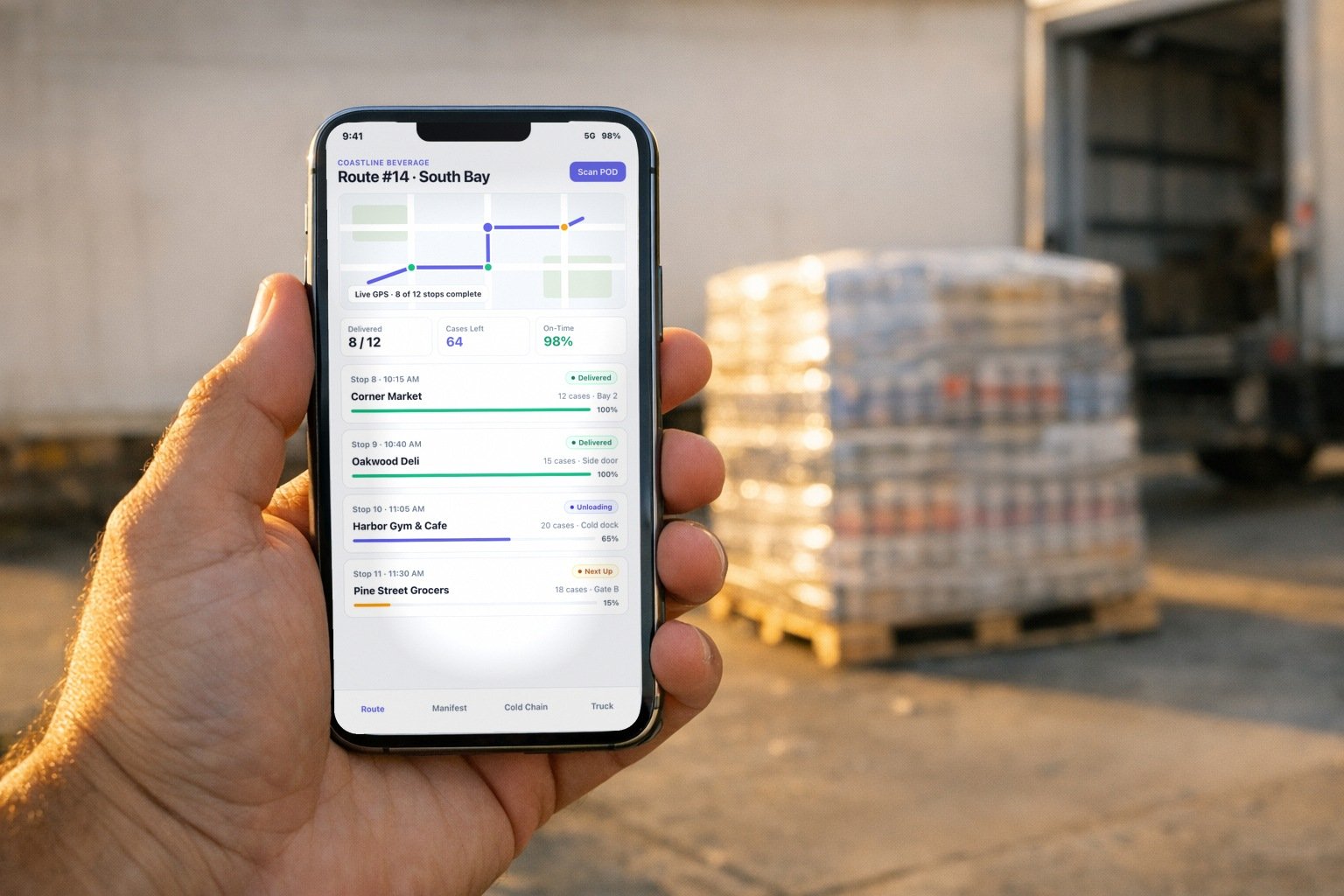
Hercules gives non-technical teams hosting, a managed database, and user sign-in with hundreds of integrations in one system. Nobody has to configure Supabase or manage Git branches.
You describe the application you need, and Hercules keeps live cloud hosting credits separate from AI editing credits. That separation protects production apps while your team ships daily updates.
Lovable suits engineering-adjacent teams that want two-way Git sync on every tier and direct control over a Supabase backend. It also covers web-only organizations looking for Lovable's enterprise IT governance suite today, including directory sync and SIEM log exports.
All-in-one managed software vs. Git-and-Supabase app generation
Choosing between Hercules and Lovable comes down to how much infrastructure your team wants to manage. Hercules gives operating teams a self-contained backend and mobile store publishing with isolated hosting credits and no external setup. Lovable builds web apps around Git repositories and Supabase projects with enterprise developer governance.
The breakdown below pulls from Lovable's published documentation, security portal, and pricing schedules. Hercules details come from Hercules docs, Hercules pricing, and the Hercules Trust Center.
Hercules and Lovable at a glance
Hercules is built for companies that want web and mobile store apps, isolated hosting credits, and hundreds of integrations ready across every tier. Lovable centers on web apps, developer Git workflows, and enterprise IT add-ons.
| Criterion | Hercules | Lovable | Edge |
|---|---|---|---|
| Primary use | Multi-user ops apps across web and mobile | Web apps, SaaS replacements, startup builds | Hercules (web + mobile ops) |
| Hosting and DB | Managed DB, functions, email, AI Gateway included | Lovable Cloud on Supabase or bring your own Supabase | Hercules (zero setup) |
| Auth and SSO | Hercules Auth, roles, company SSO, no MFA | End-user SAML/OIDC; Business SSO; Ent dir sync and SIEM | Lovable (enterprise add-ons) |
| Integrations | Commerce, App Integrations, Agents on all tiers | Stripe, Paddle, Shopify, ~100 integrations, two-way MCP | Hercules (Agents + breadth) |
| Mobile apps | Ships web app to Google Play and App Store (iOS beta) | Responsive web/PWA only (iOS FAQ says no App Store) | Hercules (app stores) |
| Code export | Full code and DB download on Hercules Cloud | Two-way Git sync (all tiers), paid download, AWS/Azure preview | Lovable (two-way Git) |
| Pricing | Separate hosting credits and adjustable AI tiers | Shared credit pool (Pro $25, Biz $50 monthly, docs); backend pauses at zero | Hercules (isolated hosting) |
Backend setup, app store publishing, and integrations
Hercules combines a managed backend with app store distribution inside one project. You describe tables, permissions, and screens in plain language, and Hercules wires the database, bulk CSV imports, outbound Hercules Email, and a built-in AI Gateway without external API keys.
Every plan includes Hercules Commerce for payments with inventory tracked in your app's database. You also get Hercules Agents and hundreds of ready-made App Integrations.
Higher tiers add automated database backups and regional hosting selection for your backend and database. Region selection works as a hosting preference rather than a legal data-residency contract. For mobile devices, Hercules also ships your web app to Google Play and the App Store from the same project, with iOS submission currently in beta.
Businesses run revenue-heavy systems on that setup without hiring an engineering team. ATOM Technology operates six online gaming brands built on Hercules, reporting $12M in annualized deposits on track for $30M and $230k saved.
Lovable runs Lovable Cloud on Supabase's open-source stack for database, storage, authentication, and edge functions. Developers can also connect an existing Supabase project or migrate the backend out later. Lovable supports Stripe and Paddle payments, Shopify storefronts, and nearly 100 app integrations including Slack, HubSpot, Snowflake, BigQuery, and Microsoft 365.
Lovable adds per-user OAuth integrations and MCP servers so published apps can run inside ChatGPT and Claude. On mobile, Lovable outputs responsive web apps and PWAs only. Its iOS app builder page confirms you can't publish a Lovable app to the App Store.
Access controls, IT governance, and owning your code
Hercules keeps user authentication, role rules, and code ownership straightforward for teams without dedicated IT staff. Hercules Auth handles social providers, one-time email codes, password logins, and paid Auth 2.0 SMS verification. You write per-app role rules in plain language, enable company SSO per Hercules pricing, and get sign-in audit logs inside your apps.
You own what you build and can download full source code and database data on paid plans. Hercules doesn't support running exported apps on outside hosts.
Teams with strict IT checklists should account for four current limits in Hercules.
- Two-factor authentication isn't available in Hercules Auth yet.
- Hercules doesn't ship automated directory provisioning.
- Builder activity logs aren't included.
- Customer-hosted deployments aren't available.
Enterprise plans add Privacy Mode (excluding content from AI training), a DPA, SLA and support commitments, volume pricing, and professional services. Review published security policies at the Hercules Trust Center.
Lovable offers a broader enterprise IT governance suite today. Its security page lists completed third-party security audits, European privacy support, and AIUC-1 AI security certification. Lovable Business adds workspace SSO, RBAC, a security center, and a DPA.
Lovable Enterprise adds automated directory provisioning, Organizations spanning multiple workspaces, SIEM audit log exports, scheduled security scans, and EU inference. Enterprise also offers private-preview deployment into your own AWS or Azure cloud. Two-way sync with GitHub, GitLab, and Bitbucket comes on every Lovable tier.
Isolated hosting credits vs. one shared workspace balance
Hercules separates cloud hosting credits from adjustable AI credit tiers so heavy editing sprints never interrupt a live app. You start on a free tier that covers hosting and publishing, then move across four published tiers as usage grows.
App Integrations and Hercules Agents are included across all plans. Paid plans add full source code and database downloads plus Auth 2.0 SMS sign-in, while higher tiers add scheduled database backups and region selection. See current tier details at Hercules pricing.
Lovable runs on a single shared credit balance. Unlimited workspace members pull from that same pool for AI building, Cloud hosting, and in-app AI calls.
| Plan | Monthly starting price | Credits and rollover | What's included |
|---|---|---|---|
| Free | $0 | 5 build/day (30/mo cap), 20 Cloud, 4 AI | Public/private projects, Git sync, no download or custom domain |
| Pro | $25 (to $2,250) | 100 credits/mo ($0.25 each), 2-mo rollover | Unlimited members, code download, custom domain, code edits |
| Business | $50 (to $4,300) | 100 credits/mo ($0.50 each), 2-mo rollover | Workspace SSO, RBAC, security center, DPA |
| Enterprise | Custom | Volume credit pool | Directory sync, SIEM logs, EU inference, AWS/Azure preview |
Those rates come from Lovable pricing and Lovable's subscription docs. Annual billing includes two months free, and top-up packs remain valid for 12 months.
The operational risk sits in Lovable's support policy. Because editing, Cloud hosting, and in-app AI drain the same workspace balance, your built-in backend pauses if credits reach zero. Teams iterating frequently on live apps need to watch auto top-up rules closely.
Situations where Lovable wins
Lovable is the stronger pick when IT security requirements mandate completed third-party audits, automated directory provisioning, SIEM log exports, multi-workspace Organizations, or EU inference today. Lovable Enterprise also provides private-preview deployment inside your own AWS or Azure cloud.
Engineering teams built around Git pull requests also fit Lovable well. Two-way sync with GitHub, GitLab, and Bitbucket comes included even on the free tier. Developers can also connect or migrate to their own Supabase project whenever they want direct database access.
Lovable also makes sense if your checkout depends on Paddle global tax handling alongside Stripe, or if you want published apps exposed as MCP servers inside ChatGPT and Claude.
Companies with dozens of staff editing internal web apps also benefit from Lovable's member model. Unlimited workspace members draw from one credit pool with no per-seat builder charges.
Should you build your business app on Hercules or Lovable?
Choose Hercules if you want non-technical operations teams to launch and run company software without configuring Supabase, managing Git branches, or monitoring shared credit pools. Hercules gives your team these capabilities in one place.
- Managed hosting and a built-in database.
- Sign-in, roles, and company SSO.
- Payments and hundreds of integrations.
- Mobile store publishing.
- Separate hosting credits that keep live apps running during busy build days.
Choose Lovable if engineers already manage your Git repos and Supabase infrastructure. It also fits a web-only team that specifically needs Lovable's enterprise IT governance suite, Paddle billing, or ChatGPT and Claude MCP exposure.
Bringing a Lovable codebase into Hercules
Teams typically migrate from Lovable to Hercules when they want mobile store publishing, broader ready-made integrations, or hosting credits isolated from editing usage. Follow the steps in the Hercules Lovable migration guide.
Download your Lovable codebase as a ZIP file from Project settings under Git (Download codebase) or from the bottom of the code editor's file tree. Exporting code requires a paid Lovable tier.
Strip out node_modules, build output directories, .env files, and API keys so the archive stays within Hercules upload limits. Drop the clean ZIP into a Hercules app chat and ask Hercules to inspect the repo and propose a migration plan that keeps your pages and layout intact.
Database tables, user profiles, API keys, and custom domains don't transfer automatically. Export your database tables to CSV for bulk import into the Hercules database, set up authentication and roles in Hercules Auth, and add keys back in Hercules Secrets.
Verify one end-to-end daily workflow across two user roles on your Hercules subdomain before updating DNS. Ready to build or import a Lovable app? Start building.
Frequently asked questions
Can Lovable publish apps to the App Store or Google Play?
No. Lovable produces responsive web apps and PWAs only. Its iOS app builder page confirms you can't publish a Lovable app to the App Store.
What happens if a Lovable workspace runs out of credits?
Per Lovable's support policy, Cloud hosting and in-app AI spend from the same balance as building. Your built-in backend pauses at zero credits unless auto top-up or extra credits are enabled.
Does Lovable charge per builder seat?
No. Per Lovable pricing and subscription docs, Lovable includes unlimited workspace members across every tier. Billing scales with shared workspace credits rather than per-seat fees.
Does Hercules separate hosting usage from AI building edits?
Yes. Hercules isolates cloud hosting credits from adjustable AI credit tiers so editing spikes don't pause a production app. See current tiers at Hercules pricing.
How can IT buyers verify Hercules security practices?
Published security policies and updates sit at the Hercules Trust Center. Treat that portal as the authoritative reference, because Hercules doesn't assert compliance certifications outside its published security pages.